

 feedom@haomei-machinery.com
Concrete Mixer And Pump
Posted On: 08/09/2026 | Posted by: Haomei Concrete Pumps
A concrete mixer and pump combines batch mixing and concrete delivery in one mobile machine. It is designed for projects where ready-mix trucks cannot easily access the work area, where concrete demand is intermittent, or where labor needs to be reduced. By producing and pumping fresh concrete at the same location, the equipment can support foundations, rural housing, drainage works, small bridges, tunnels, and slope protection.
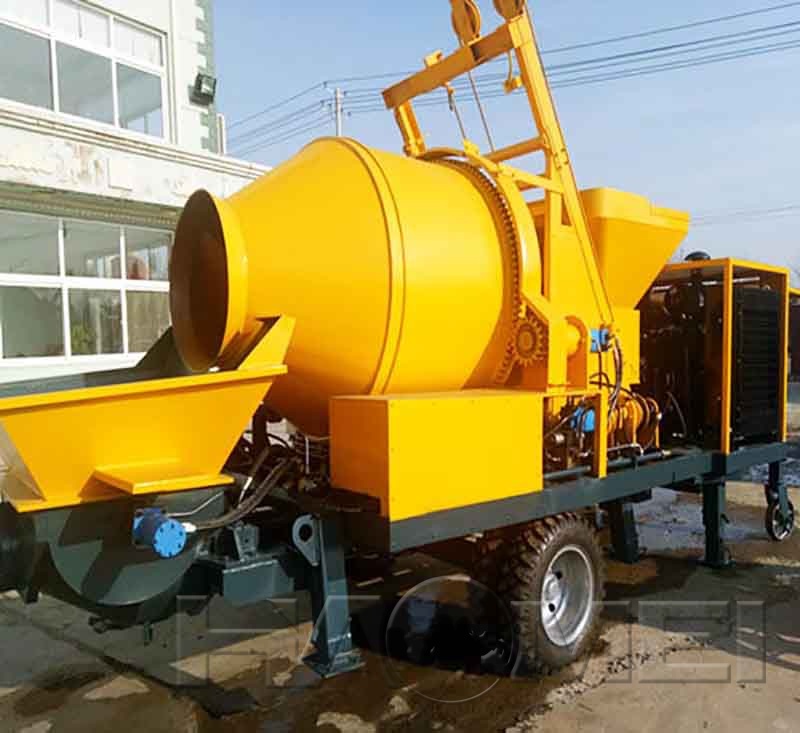
Integrated Design Details That Improve Jobsite Performance
The main structure typically includes a mixing drum or twin-shaft mixer, hopper, hydraulic pumping system, delivery cylinders, S-valve or distribution valve, control panel, and chassis. Material enters through the hopper, is mixed to the required consistency, and then moves into the pumping chamber for delivery through pipelines or hoses.
The mixer should provide stable blending without excessive segregation. A properly designed drum uses internal mixing blades arranged to lift, fold, and move aggregates through the cement slurry. Wear-resistant blade liners are important because sand and stone continuously abrade the mixing chamber. Some models use bolted blades and liners, allowing worn parts to be replaced without changing the complete drum.
The pumping unit depends on hydraulic pressure to move concrete through delivery cylinders. A high-quality hydraulic system should include filtration, cooling, pressure protection, and reliable hose routing. These details reduce overheating and help maintain consistent pumping output during long pours. The S-valve, often used for aggregate concrete, must have a hardened wear ring and cutting ring to maintain an effective seal under pressure.
For mobile operations, chassis design also matters. A compact layout, balanced weight distribution, and durable axle configuration improve towing stability and positioning on uneven ground. A Concrete Mixing Pump is particularly useful when a project needs one machine to handle both fresh concrete production and pipeline placement without relying on several separate units.
| Component | Preferred Design Feature | Practical Benefit |
|---|---|---|
| Mixing drum or mixer | Replaceable wear liners and mixing blades | Extends service life and supports consistent mixing |
| Hydraulic system | Filtered oil circuit and cooling system | Reduces heat-related wear and unstable operation |
| Pumping cylinders | Chrome-plated cylinder surface | Improves corrosion resistance and seal life |
| S-valve assembly | Hardened wear ring and cutting ring | Helps prevent leakage and pumping pressure loss |
| Hopper | Protective grille and accessible cleaning area | Improves safety and makes washout easier |
| Control system | Clear gauges, emergency stop, and remote control option | Supports safer, more accurate operation |
Material Selection and Operating Advantages
Material quality directly affects uptime. Wear parts exposed to aggregate, such as mixer blades, hopper liners, S-valves, wear plates, and pipeline elbows, should use abrasion-resistant alloy steel. Hard-facing treatment can further improve resistance in high-wear locations. Delivery pipelines should have sufficient wall thickness for the planned pressure and aggregate size. Thin or excessively worn pipes can fail suddenly and create a serious safety risk.
Hydraulic cylinders need precision-machined surfaces, high-quality seals, and clean hydraulic oil. Contaminated oil is one of the most common causes of valve sticking, pump wear, and hydraulic overheating. Equipment with accessible filters, fluid-level indicators, and drain points is easier to maintain correctly.
Compared with using a standalone mixer and a separate concrete pump, an integrated unit can reduce equipment transfers, site congestion, and coordination time. Operators can adjust the mix based on actual work conditions, provided that the approved mix design is followed. This is useful where material supply is limited or where the required volume does not justify repeated ready-mix truck deliveries.
A compact Concrete Mixer Pump Trailer can also be positioned close to the pour area, reducing pipeline length. Shorter pipelines generally mean less pressure loss, lower blockage risk, and faster cleaning after work. However, the machine must be placed on firm, level ground with enough space for safe loading, hose movement, and routine inspection.
Troubleshooting Common Mixing and Pumping Problems
Most operating faults can be prevented through correct mix preparation, daily inspection, and cleaning immediately after each shift. Concrete should meet the specified aggregate size, slump range, and water-cement ratio for the pump and pipeline arrangement. Adding excess water may make initial pumping easier, but it can reduce concrete strength and increase segregation risk.
| Problem | Likely Cause | Recommended Action |
|---|---|---|
| Pipeline blockage | Low slump, oversized aggregate, poor lubrication, or long pause during pumping | Stop pumping, release pressure safely, inspect the line, and use approved mortar lubrication before restarting |
| Weak or uneven pumping | Worn piston seals, hydraulic oil shortage, air leakage, or valve wear | Check oil level, inspect seals and suction connections, and measure system pressure according to the manual |
| Mixer turns slowly | Overloaded mix, hardened material, loose belt, or hydraulic fault | Remove hardened concrete, reduce batch load, inspect transmission parts, and check hydraulic pressure |
| Hydraulic oil overheats | Dirty oil, blocked cooler, low oil level, or continuous high-pressure operation | Clean the cooler, replace contaminated oil and filters, verify oil level, and avoid unnecessary pressure holding |
| Concrete leaks at valve area | Worn wear ring, cutting ring, or valve sealing surface | Inspect the valve assembly and replace worn parts as a matched set when required |
| Excessive vibration | Uneven ground, loose fasteners, damaged bearings, or pipeline movement | Level the machine, tighten fasteners to specification, inspect bearings, and secure the delivery line |
Before clearing a blockage, stop the mixer-pump, isolate power as required, and fully release line pressure. Never open a clamp or pipeline connection while pressure remains in the system. Personnel should stay clear of hose ends and delivery outlets during priming, pumping, and cleaning.
Daily work should include checking engine or motor condition, hydraulic oil level, grease points, hopper grate condition, pipeline clamps, tire pressure on trailer models, and emergency stop function. After pumping, wash the hopper, mixer, valve area, and pipeline before concrete hardens. Regular inspection of high-wear parts helps operators schedule replacement before output drops or an unexpected shutdown interrupts the pour.
Original source: https://www.concrete-pump-cn.com/a/concrete-mixer-and-pump.html
Tags: Concrete Mixer And Pump, Concrete Mixing Pump,
Previous: Cement Mixer With Pump
Next: