

 feedom@haomei-machinery.com
Cement Mixer With Pump
Posted On: 01/09/2026 | Posted by: Haomei Concrete Pumps
A cement mixer with pump is often called a concrete mixer pump because it combines on-site mixing and concrete delivery in one mobile machine. Recent discussions across search forums and construction Q&A communities repeatedly focus on productivity, pumping distance, mix quality, power choice, and daily care. The answers below address those practical concerns with selection factors that matter on active jobsites.
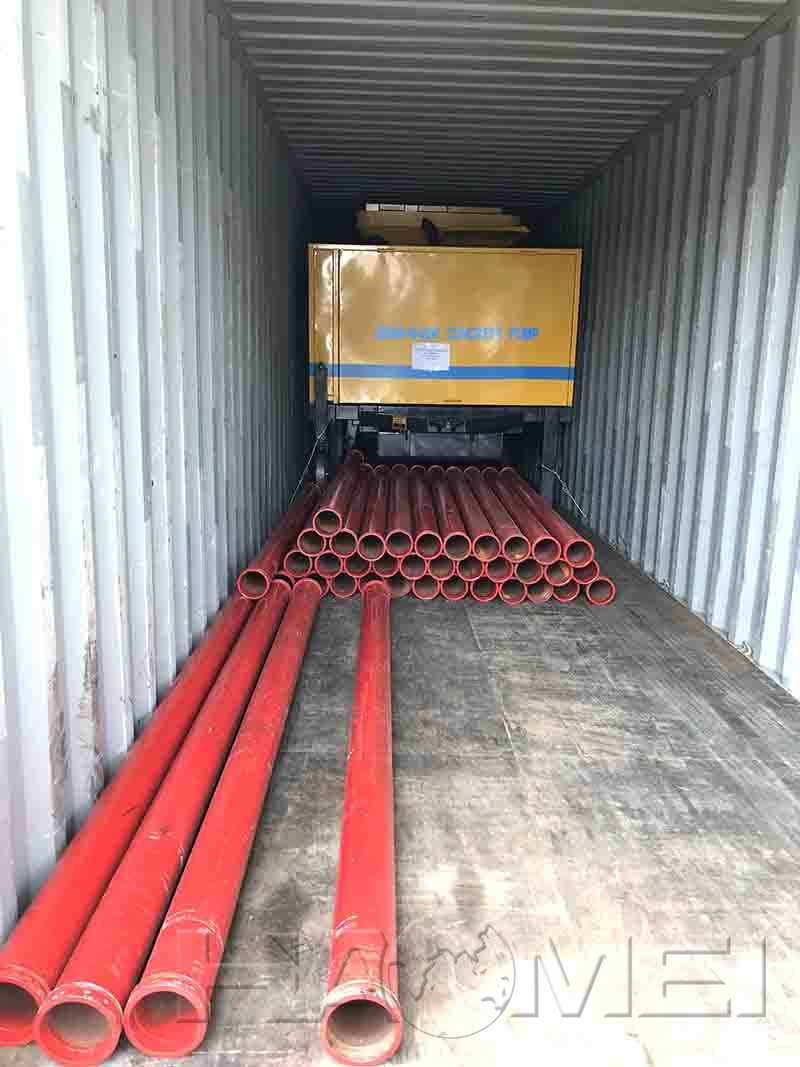
1. Can a cement mixer with pump replace a separate mixer and concrete pump?
It can, provided the required concrete volume and delivery distance fit the machine's rated capacity. A mixer pump loads aggregates, cement, water, and admixtures into its mixing drum or pan mixer, produces concrete on-site, then sends it through delivery pipes using a hydraulic pumping system. This arrangement can reduce equipment transfers and waiting time for ready-mix deliveries.
It is particularly practical for house foundations, rural access roads, small commercial slabs, retaining walls, drainage channels, and projects with limited access. A separate batching plant and line pump may still be more productive for continuous high-volume pours, large elevated structures, or placements requiring long pipelines.
| Job condition | Mixer pump suitability | Why it matters |
|---|---|---|
| Remote or narrow-access project | High | One unit mixes and pumps without relying on a transit mixer. |
| 20-80 m3 intermittent daily placement | Often suitable | The machine can support staged pouring and smaller crews. |
| Large uninterrupted slab pour | Depends on output target | A larger line pump and ready-mix supply may maintain a steadier flow. |
| Multiple short pours at different locations | High | The unit can relocate and prepare fresh concrete as needed. |
When comparing models, assess actual theoretical output, rated pumping pressure, hopper size, pipe diameter, and engine power. The published maximum output is not necessarily the field output because loading speed, aggregate moisture, mix consistency, pipe layout, and operator routines all affect production.
2. How far and how high can a cement mixer with pump send concrete?
Distance depends on pump pressure, cylinder diameter, pipe diameter, concrete slump, aggregate grading, and the number of bends in the pipeline. Manufacturers commonly list separate horizontal and vertical theoretical distances. Those figures should be treated as operating limits under favorable conditions, not as a target for every job.
For a short line with few bends, a compact machine may pump efficiently to a nearby footing or ground-level slab. For uphill delivery, long pipelines, or several elbows, pressure losses increase quickly. Each bend, reducer, flexible hose section, and poorly supported pipe run adds resistance.
A useful planning method is to map the full route before selecting equipment:
- Measure the horizontal pipe run and vertical rise.
- Count elbows, clamps, reducers, and hose sections.
- Confirm the planned concrete aggregate size fits the pipe diameter.
- Allow a capacity margin rather than selecting a pump at its stated maximum distance.
- Ensure pipe supports are secure, especially on slopes and elevated work areas.
For projects requiring regular movement between tight locations, a Mini Concrete Mixer with Pump can be appropriate when its pressure and output match the pipeline design. A compact footprint helps access, but compact dimensions should not be used as a substitute for adequate pumping capacity.
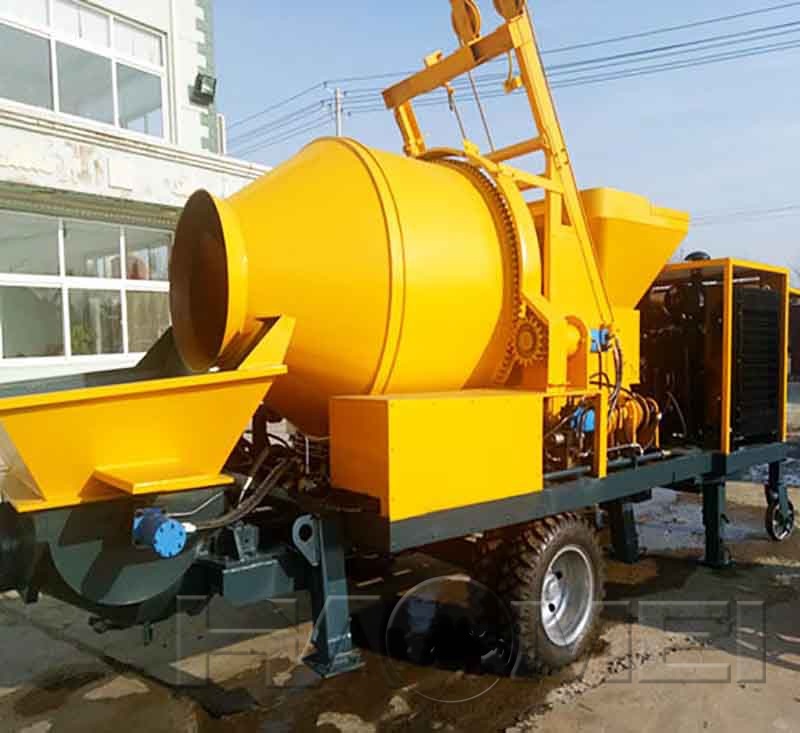
3. What concrete mix can a mixer pump handle without blocking the pipe?
A pumpable mix needs more than enough water. It needs consistent aggregate grading, sufficient mortar to lubricate the pipe wall, and a slump suitable for the pump and placement method. Oversized aggregate, dry material pockets, poorly mixed batches, or rapid slump loss can lead to blockage.
Always follow the maximum aggregate size specified for the particular machine and delivery pipe. In general, larger pipelines can tolerate larger aggregate, while smaller pipes need carefully controlled material. Angular crushed stone may also create more resistance than rounded aggregate, particularly in long or complex pipelines.
Before pumping the first batch, operators normally prime the pipeline with mortar or a compatible lubricant. This creates a lubricating layer inside the pipe. The first concrete batch should be monitored closely at the discharge end. If the mix separates, pulses unusually, or exits too dry, stop and correct the batch before continuing.
| Mix-control item | Practical check |
|---|---|
| Aggregate size | Keep within the pump and pipe specification. |
| Sand content | Maintain enough fine material for pipe lubrication. |
| Water addition | Measure it consistently; avoid uncontrolled water addition. |
| Slump | Use the range recommended for the selected pump. |
| Batch mixing time | Mix long enough to remove dry pockets and uneven distribution. |
Admixtures can improve workability retention, but they should be tested with local materials. A mix that performs well in a drum mixer is not automatically suitable for a long pumping line.
4. Is diesel or electric power better for a concrete mixer pump?
Diesel power is usually preferred where grid electricity is unreliable, the machine must travel between sites, or the job is in a remote area. It offers operational independence, but fuel planning, engine servicing, noise, and exhaust management need attention. An appropriately sized Diesel Concrete Mixer Pump for Sale may suit sites where electrical supply cannot support continuous motor loads.
Electric models can be attractive in urban projects, enclosed work areas with suitable ventilation arrangements, and locations with stable three-phase power. They are generally quieter and eliminate on-site diesel exhaust, yet installation depends on confirmed voltage, frequency, cable sizing, circuit protection, and generator compatibility where applicable.
Do not make the decision based on fuel price alone. Compare the full operating setup: daily runtime, access to fuel or power, permitted noise levels, travel requirements, maintenance capability, and expected project duration. A machine that matches site utilities can prevent avoidable downtime.
5. What maintenance prevents the most expensive mixer pump problems?
The most valuable maintenance work happens immediately after pumping. Concrete hardens quickly, and leftover material in the hopper, mixer, pump chamber, pipes, and discharge hose can create hours of labor and unnecessary wear. Clean the complete material path after every shift, following the manufacturer-approved washing procedure.
Daily inspection should also cover hydraulic oil level, engine oil, coolant, grease points, pipe clamps, seals, hoses, tire condition, water system operation, and mixer blade wear. Look for hydraulic leaks before they become pressure-loss problems. Check that safety guards, emergency stops, and remote-control functions operate correctly.
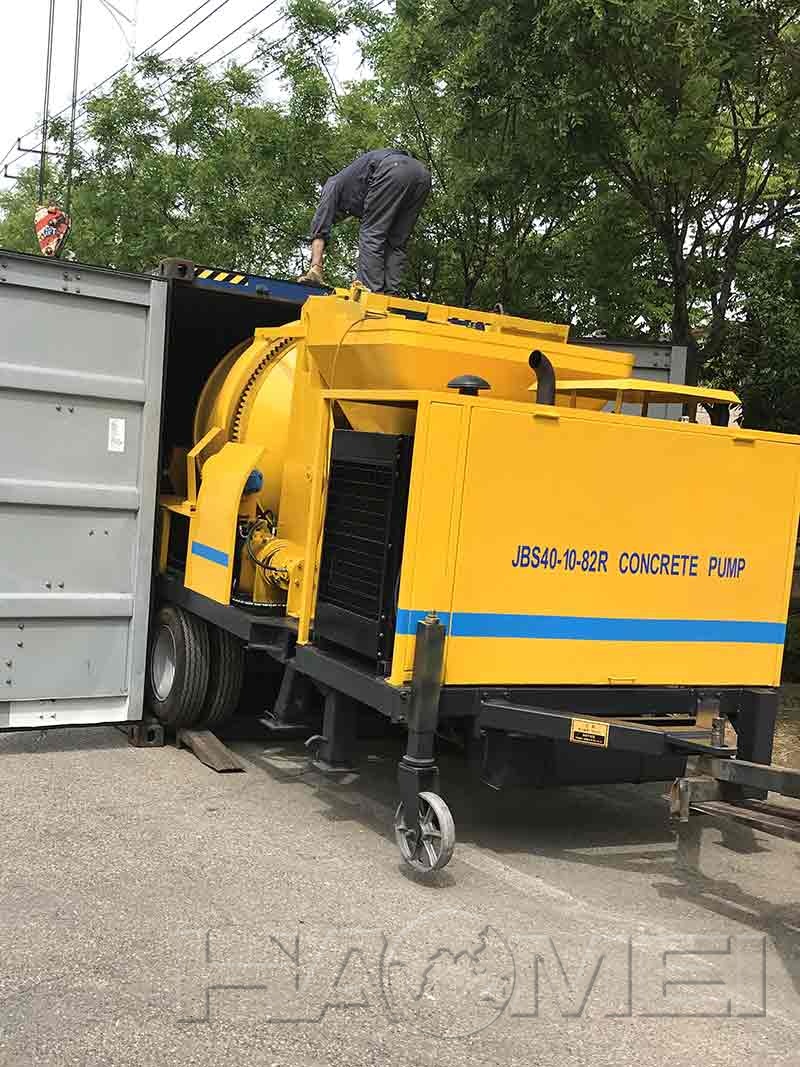
Pipe wear deserves special attention. Abrasive concrete gradually thins elbows and high-wear sections, particularly near the pump outlet and bends. Rotate or replace components according to their wear condition, not only when leakage appears. Keep a maintenance log recording operating hours, lubrication, filter changes, hydraulic checks, cleaning records, and replacement parts. This helps crews schedule service around projects instead of reacting to a stoppage during a pour.
Original source: https://www.concrete-pump-cn.com/a/cement-mixer-with-pump.html
Tags: cement mixer with pump, concrete mixer pump, concrete mixing pump,
Previous: Electric Concrete Pump
Next: