
 feedom@haomei-machinery.com
58m Concrete Pump
Posted On: 08/04/2026 | Posted by: Haomei Concrete Pumps
A 58m concrete pump is built for projects that need long vertical reach, wide placing coverage, and stable output under demanding site conditions. It is commonly selected for high-rise buildings, large foundations, bridge works, and commercial structures where concrete must be delivered quickly and precisely. For equipment users comparing long-boom solutions, this class offers a useful balance between reach, mobility, and jobsite flexibility.
Cutting-edge design details
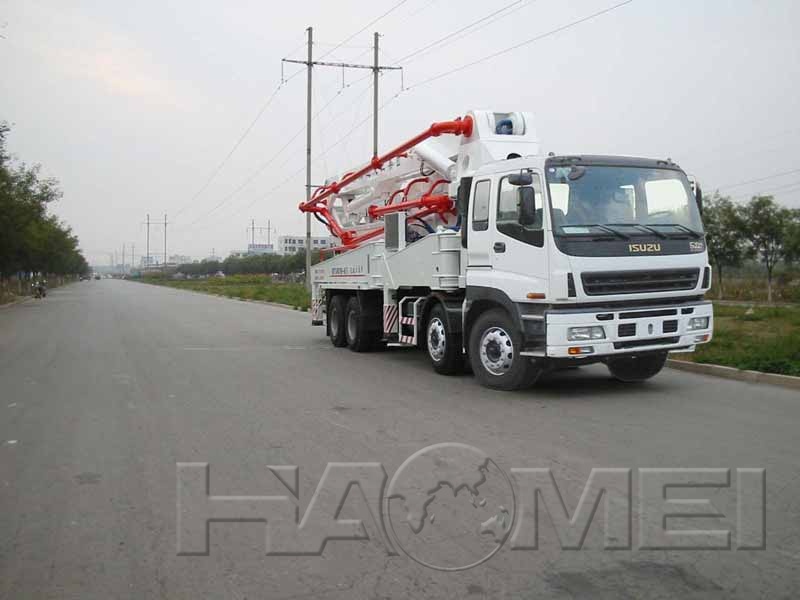
The most important feature of this machine is the boom system. A 58-meter boom is usually designed with multiple sections and optimized folding geometry so it can open smoothly in restricted urban sites while still covering a large pouring area. The boom structure often uses high-strength steel to reduce dead weight without sacrificing rigidity. This helps improve stability during pumping and lowers structural fatigue over long service cycles.
The slewing system and turret are engineered to support precise boom movement. In real operation, smooth slewing matters because sudden movement can affect hose positioning and pouring accuracy. A refined hydraulic control system improves proportional action, making the boom easier to handle during wall, slab, and column placement.
The pumping unit is another core part of the machine. It typically includes a high-wear hopper, robust delivery cylinders, hydraulic drive components, and an efficient S-valve or similar switching system. These parts are designed to maintain steady concrete flow and reduce pulsation. When matched with proper pipe layout and concrete mix quality, the unit can support continuous pumping over long heights and distances.
Chassis matching also affects overall performance. A long-reach pump truck needs a strong chassis, reliable powertrain, and properly engineered outrigger layout. Front and rear outriggers are designed to distribute load effectively and support safe boom deployment. This is especially important when the machine works on uneven or space-limited sites.
For companies comparing models across reach classes, a Boom Pump with shorter or longer reach may suit different slab sizes, height demands, and transport conditions.
Advantages of selected materials and equipment use
Material selection has a direct effect on service life and operating cost. High-strength structural steel in the boom reduces weight while maintaining the required load-bearing capacity. Less boom weight can improve stability design and reduce stress on the turntable and chassis. In wear areas, manufacturers often use abrasion-resistant steel plates, hardened delivery pipes, and durable wear rings to extend replacement intervals.
Key material and performance advantages are shown below.
| Component | Common material or design choice | Practical advantage |
|---|---|---|
| Boom sections | High-strength steel | Lower weight, good rigidity, longer fatigue life |
| Delivery pipeline | Wear-resistant steel pipe | Better resistance to abrasion from aggregate flow |
| Hopper liner | Abrasion-resistant plate | Longer service life in high-contact zones |
| Hydraulic seals and hoses | Quality rubber and reinforced materials | Reduced leakage risk, stable pressure control |
| Outriggers | Reinforced structural steel | Better machine stability during operation |
Using this equipment on site brings several clear benefits. First, it improves pouring efficiency by reducing the need for repeated pipe handling and manual transport. Second, the long boom expands the placing radius, so more area can be covered from one parking position. Third, accurate boom control helps reduce waste and improves placement quality in complex forms.
For contractors working on mixed project types, comparing this machine with options such as Concrete Boom Pump Of 48m/52m can help match reach and cost to actual site demand.
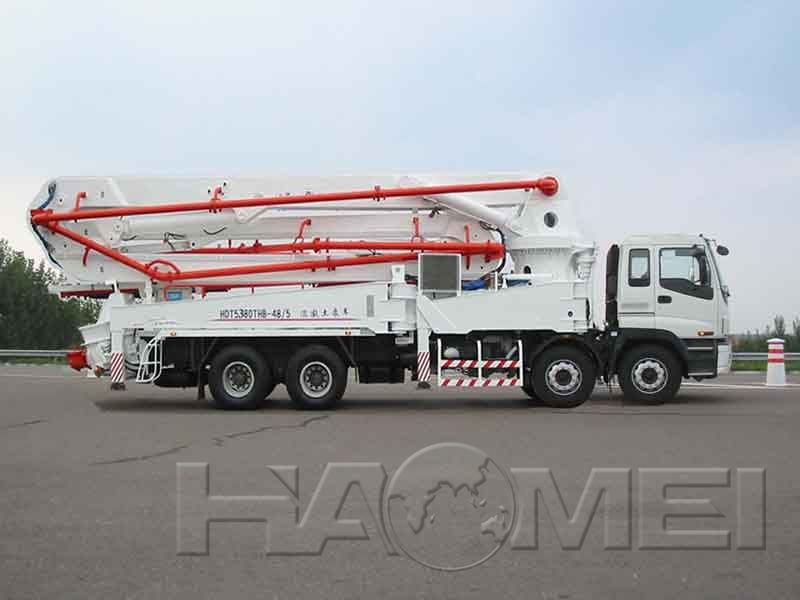
A 58-meter concrete boom pump is especially useful in the following situations:
| Job type | Equipment benefit |
|---|---|
| High-rise building | Strong vertical reach, fewer repositioning moves |
| Large raft foundation | Broad horizontal coverage and fast placing |
| Bridge or overpass work | Flexible boom articulation around obstacles |
| Industrial plant construction | Accurate placing in complex structural zones |
Common problems and practical solutions
Even a well-designed machine can face issues if maintenance, operation, or concrete quality is not controlled properly. Most field problems are related to blockages, unstable pumping, boom vibration, hydraulic overheating, or wear-part failure.
Pipe blockage
Pipe blockage is one of the most common pumping problems. It usually comes from poor concrete workability, oversized aggregate, delayed pumping after loading, or improper lubrication before starting.
Solution:
- Confirm the mix design matches pumping requirements.
- Use mortar or slurry for pipeline lubrication before pumping.
- Avoid long pauses with concrete remaining in the pipeline.
- Check elbows and reducers first, as these areas wear faster and block more easily.
Unstable output or weak pumping pressure
If output becomes irregular, the causes may include worn pistons, leaking hydraulic seals, air entering the suction side, or excessive wear in the S-valve and wear plate area.
Solution:
- Inspect concrete cylinders, pistons, and hydraulic seals.
- Check hopper feeding condition and prevent empty suction.
- Measure hydraulic pressure and compare it with equipment standards.
- Replace worn wear plate, cutting ring, or related parts when clearance becomes excessive.
Boom shaking during placement
Boom vibration can be related to incorrect outrigger setup, unstable ground, sudden control input, or wear in structural and hydraulic components.
Solution:
- Fully deploy outriggers according to operating requirements.
- Use pads or steel plates if ground bearing capacity is limited.
- Operate the boom with smooth, progressive movements.
- Inspect pins, bushings, and hydraulic cylinders for looseness or wear.
Hydraulic oil overheating
High oil temperature reduces efficiency and shortens component life. Common reasons include dirty coolers, overloaded operation, oil contamination, or poor ventilation around the hydraulic system.
Solution:
- Clean the hydraulic cooler regularly.
- Use the specified hydraulic oil grade.
- Replace filters on schedule.
- Check whether the pump is being forced to work beyond recommended conditions.
Excessive wear of pipes and wear parts
Concrete with harsh aggregate, high output demand, and poor cleaning habits accelerate wear. Delivery elbows, reducers, wear rings, and hopper liners are common replacement items.
Solution:
- Inspect wear thickness regularly.
- Rotate or replace high-wear pipeline sections in time.
- Wash the system thoroughly after each shift.
- Keep critical spare parts available to reduce downtime.
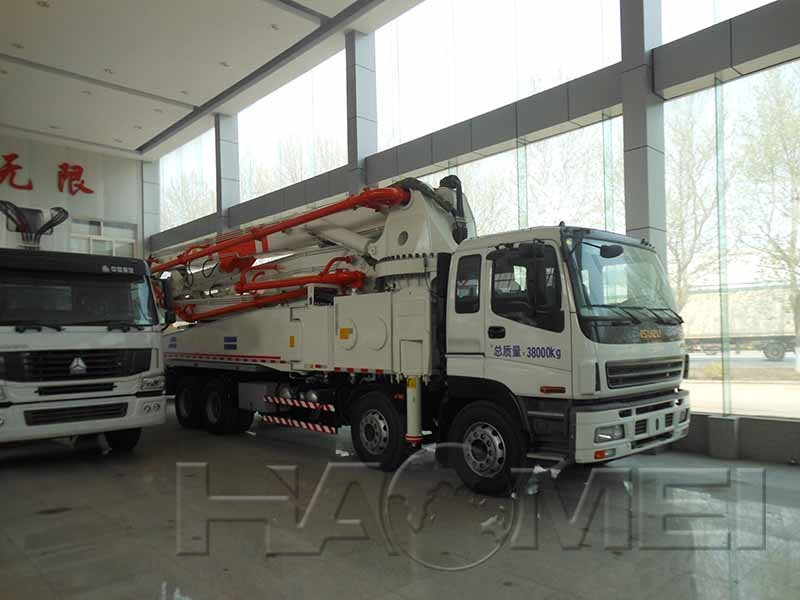
Routine inspection is the best way to protect long-term performance. Operators should check hydraulic oil level, lubrication points, pipeline condition, boom pins, outriggers, and hopper cleanliness before each shift. A preventive maintenance plan is usually more cost-effective than waiting for a shutdown on an active project.
When evaluating a long-reach pump truck, it is worth looking beyond boom length alone. Steel quality, hydraulic matching, wear-part durability, chassis support, and ease of maintenance all influence real jobsite value. A well-built 58m concrete boom pump can deliver strong reach, reliable output, and efficient concrete placement when operated correctly and maintained on schedule.
Original source: https://www.concrete-pump-cn.com/a/58m-concrete-pump.html
Tags: 58m concrete pump, 58m concrete boom pump,
Previous: Concrete Pump Truck Reach
Next: Small Concrete Pump for Sale