

 feedom@haomei-machinery.com
Concrete Pump Long Boom
Posted On: 25/06/2026 | Posted by: Haomei Concrete Pumps
A concrete pump long boom can remove crane buckets, shorten pour cycles, and reach slabs that ground crews cannot access. It can also become an expensive idle asset if the reach, outrigger footprint, chassis, and pump kit do not match the work.
For equipment purchasers, the decision should start with job geometry and cash flow, not the largest number on the boom decal.
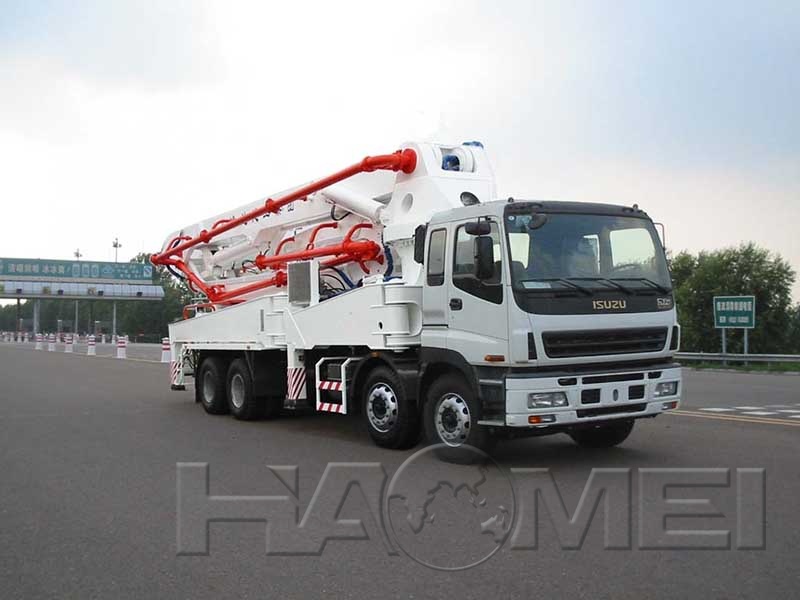
Match boom length to work, not ego
Start with a site sketch. Mark the pump parking zone, building edge, slab zones, overhead lines, excavations, traffic lanes, and washout area. Then compare the real horizontal reach, not only the vertical boom rating.
Manufacturers publish boom reach charts by model. These charts matter because the working envelope changes with boom style, section count, slew angle, and outrigger position. A 52 m class unit may not place concrete where a drawing shows 52 m from the bumper.
Use this practical selection table before requesting quotations.
| Job condition | Better choice | Why it solves the problem |
|---|---|---|
| Residential slabs, low-rise work, tight urban streets | 30 m to 40 m | Lower purchase cost, easier positioning, smaller outrigger area |
| Mid-rise floors, bridges, commercial pads | 42 m to 52 m | Good reach without extreme weight or road-permit issues |
| Large industrial pours, wind farms, deep setbacks | 56 m to 65 m+ | Fewer moves, longer horizontal reach, higher daily output |
| Congested sites with obstacles | Z-fold or RZ-fold boom | Opens faster in low headroom and can work around structures |
| High-volume mat pours | Larger pump cell, hopper, and pipeline plan | Boom reach alone will not maintain output |
If your normal work is 45 m to 52 m, compare machine weight, outrigger spread, and parts availability before stepping up to a super-long model. For large infrastructure work where repositioning is costly, reviewing specifications for a 65 Meter Concrete Pump Long Boom can help you benchmark reach and production capacity.
For mixed commercial work, a 45 Meter Z Boom Concrete Pump may be easier to place on restricted jobsites while still serving profitable mid-range pours.
Pre-purchase site fit checklist
- Confirm maximum horizontal reach needed from a realistic pump parking point.
- Check outrigger footprint against street width, trenches, curbs, basements, and soft ground.
- Verify legal axle weights, bridge limits, and transport permits in your operating region.
- Match pump output to your ready-mix supply rate; under-supplied pumps waste money.
- Ask for the boom inspection history, pump hours, engine hours, and cylinder stroke count if available.
- Confirm local emissions rules, such as EPA Tier 4 Final in the U.S. or Stage V in the EU for applicable engines.
Cost, inspection, and investment math
Long-boom concrete pump trucks are capital-intensive. Public asking prices vary widely by year, chassis, hours, boom length, region, and inspection status. As a budgeting reference, used 36 m to 40 m units often list in the low-to-mid six figures, while late-model 50 m to 60 m class machines can move into high six figures or above. New long-reach machines can exceed seven figures after chassis, emissions package, options, freight, and taxes.
Treat any advertised price as only the first line of the ownership calculation.
| Cost item | What to verify | Why it matters |
|---|---|---|
| Boom inspection | Annual and major structural inspection records | Cracks, pin wear, and previous repairs affect safety and resale value |
| Wear parts | S-tube, wear plate, cutting ring, delivery cylinders | High-wear parts can change operating cost quickly |
| Hydraulic system | Oil analysis, pump pressure, leaks, hose age | Long booms rely on stable hydraulic control |
| Chassis | Mileage, engine emissions system, transmission, brakes | Road downtime can cancel pour revenue |
| Pipeline | Wall thickness, clamps, elbows, reducers | Pipe failure creates safety and schedule risk |
| Electronics | Remote control, outrigger interlocks, sensors, telematics | Faults can limit boom operation or disable safety functions |
A simple payback model should include utilization, not optimism. If the pump earns revenue only eight days per month, ownership cost per working day will be much higher than a unit booked twenty days per month.
Use this formula during evaluation:
Annual ownership cost = finance or depreciation + insurance + registration + inspections + storage + planned maintenance + estimated repairs.
Then compare it with expected gross margin from pumping work. Include operator wages, fuel, washout time, yard labor, travel time, pipe handling, and standby charges. A long boom earns best when it reduces repositioning, replaces extra labor, or secures work that smaller pumps cannot perform.
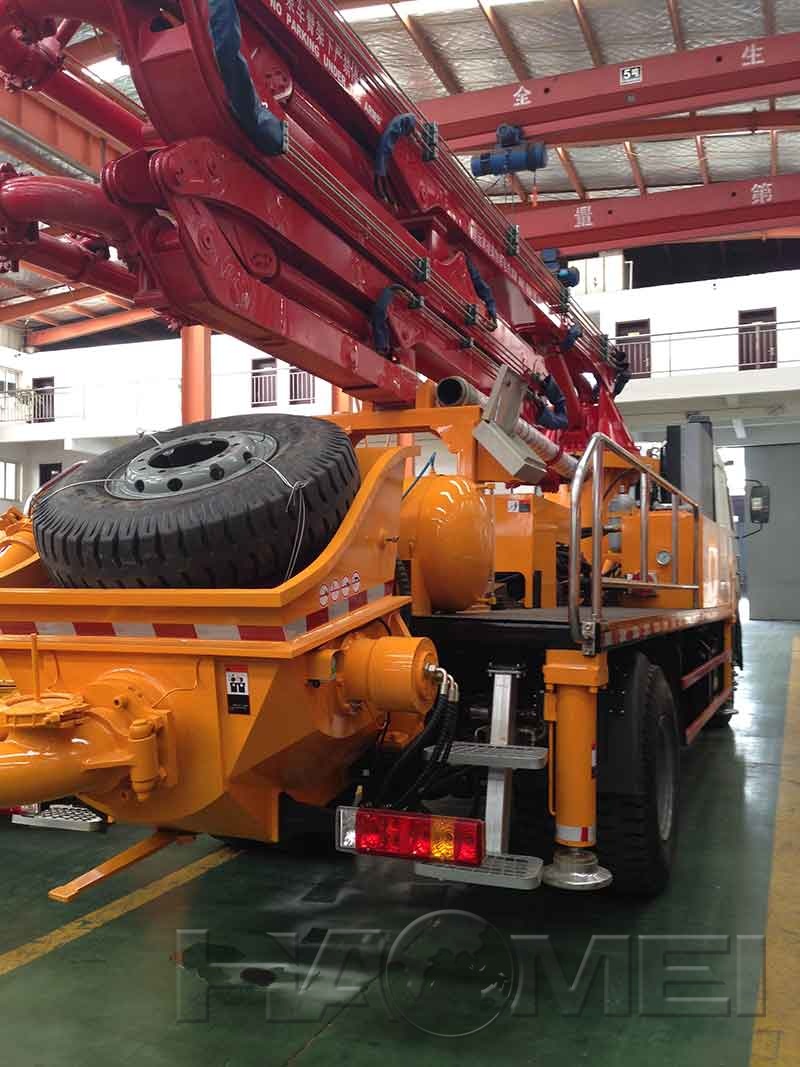
Before signing, request these documents:
- Manufacturer serial number confirmation.
- Boom inspection report from a qualified inspector.
- Maintenance log and parts invoices.
- Remote-control test record.
- Current meter readings.
- Pump kit measurements.
- Chassis diagnostic scan.
- Proof of title or export documents.
Safe production and industry trends
Safety is not optional with long-reach pumping. The U.S. OSHA concrete construction rule at 29 CFR 1926.702(e) addresses concrete pumping systems, including support for discharge pipes and secure hose connections when compressed air is used. ASME B30.27, Material Placement Systems, is the recognized U.S. consensus standard covering construction, inspection, testing, maintenance, and operation of concrete pumps and placing booms. In Europe, EN 12001 covers safety requirements for concrete conveying, spraying, and placing machines.
Do not rely on a sales brochure for compliance. Match the machine, operator training, and inspection process to the rules in your jurisdiction.
Pour-day operating checklist
- Hold a pre-pour meeting with the pump operator, ready-mix supplier, placing crew, and site supervisor.
- Verify ground bearing capacity under every outrigger pad.
- Keep the boom clear of overhead electrical hazards; set exclusion zones before trucks arrive.
- Use properly rated pipe, clamps, reducers, and end hoses.
- Never open a pressurized line.
- Control the end hose; hose whip can be fatal.
- Confirm radio or hand-signal communication before concrete is discharged.
- Plan washout water handling to comply with local environmental rules.
The market is also changing. Telematics are becoming standard on premium pump trucks, giving fleet managers data on engine hours, pumping hours, fault codes, location, maintenance intervals, and fuel use. This helps compare operator performance and schedule service before a pour is missed.
Sensor-supported outrigger monitoring is another major trend. Systems that detect support position, load conditions, and unsafe setup help reduce tip-over risk, especially on congested sites. They do not replace competent setup, but they add useful protection.
Concrete mix design is changing too. Low-carbon mixes with supplementary cementitious materials, viscosity modifiers, and fibers can behave differently in a pump line. Before accepting a difficult specification, test pumpability, maximum aggregate size, slump flow, admixture timing, and line diameter. A powerful pump cannot fix a mix that segregates or blocks.
Rental demand remains strong where contractors face uneven workloads. Owning a long boom makes sense when utilization is predictable, maintenance capability exists, and local jobs pay for reach. Renting or subcontracting may be smarter when work is seasonal, permits are complex, or operators are hard to retain.
When comparing machines, rank options by verified reach chart, outrigger footprint, service support, inspection condition, total cost per working day, and resale demand. The right long-reach pump is not simply the longest boom; it is the machine that places concrete safely, repeatedly, and profitably on the jobs you actually win.
Original source: https://www.concrete-pump-cn.com/a/concrete-pump-long-boom.html
Tags: concrete pump long boom, long reach concrete pump truck,
Previous: Concrete Pump Truck Cost
Next: New Concrete Boom Pumps for Sale