

 feedom@haomei-machinery.com
Cement Pump Trailer for Sale
Posted On: 02/06/2026 | Posted by: Haomei Concrete Pumps
A cement pump trailer for sale is often searched by contractors who need a compact, movable, and cost-efficient way to place concrete. In industry terms, most of this equipment is called a trailer-mounted concrete pump or concrete line pump, because cement is only one ingredient in concrete. The machine pumps a workable concrete mix through delivery pipes or hoses to slabs, foundations, columns, tunnels, and repair areas where a mixer truck cannot discharge directly.
For construction equipment purchasers, the value of a trailer pump is not only its rated output. The real value comes from the structure of the pumping system, the quality of wear parts, the stability of hydraulic control, and the ease of maintenance after long operating hours.
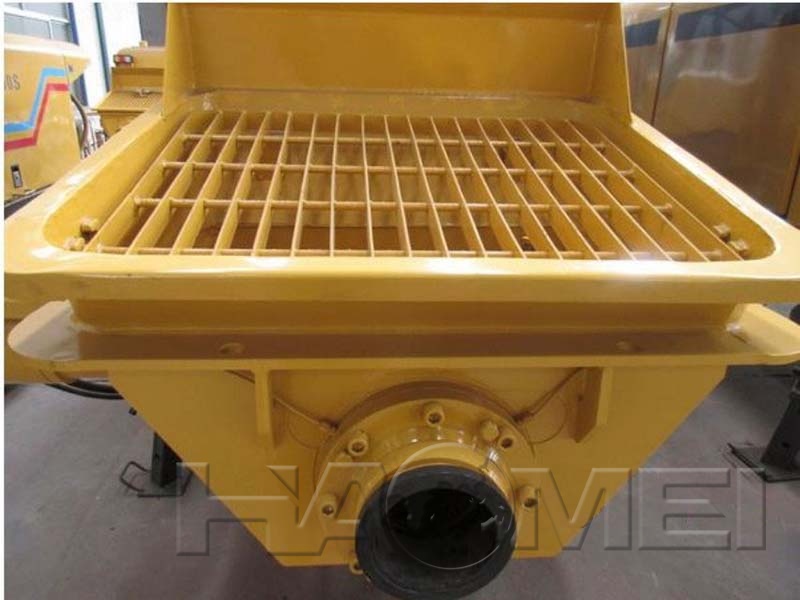
Cutting-Edge Design Details That Matter
A modern trailer concrete pump is built around a hopper, mixing shaft, concrete cylinders, hydraulic cylinders, distribution valve, power unit, control cabinet, and trailer chassis. The pumping cycle is simple in principle: one concrete cylinder draws material from the hopper while the other pushes concrete into the delivery line. The distribution valve switches direction in coordination with the cylinders.
The S-valve is widely used because it handles common ready-mix concrete with better sealing performance and smoother flow. A well-machined S-valve reduces pressure loss, lowers concrete segregation risk, and improves service life when paired with a hard-wearing wear plate and cutting ring.
The hydraulic system is another major design point. A high-quality open or closed hydraulic circuit should provide stable pressure, quick reversing, and good heat dissipation. Many advanced machines use electric control combined with hydraulic proportional control, making output adjustment easier for operators. This helps when pumping at different distances, heights, or slump conditions.
The trailer chassis also deserves attention. A reinforced frame, proper axle load distribution, road lights, outriggers, and towing connection all affect transport safety. On narrow jobsites, compact dimensions and a lower hopper loading height can reduce labor intensity and make cleanup faster.
| Design area | What to inspect | Why it matters |
|---|---|---|
| Pumping valve | S-valve fit, wear plate, cutting ring | Controls sealing and pumping pressure |
| Hydraulic system | Pump brand, hose layout, cooling capacity | Affects output stability and uptime |
| Hopper | Grate, mixer blade, cleaning opening | Improves feeding and maintenance safety |
| Control panel | Emergency stop, wired remote, fault display | Helps operators respond quickly |
| Trailer frame | Welding quality, outriggers, tires | Supports safe towing and stable work |
For small and medium projects, a Line pump is often preferred because it can place concrete through flexible hoses with less setup space than boom equipment.
Material Selection and Equipment Advantages
The materials used in a trailer pump determine how long it can work under abrasive concrete conditions. Concrete contains sand, aggregate, cement paste, and admixtures. During pumping, these materials continuously rub against the valve, pipes, piston, wear plate, and cutting ring.
High-strength steel is commonly used for the main frame because it gives the equipment structural rigidity without making the machine unnecessarily heavy. For the hopper and pumping zone, manufacturers often use thicker steel plates and replaceable wear components. Chrome alloy, tungsten carbide coating, or other wear-resistant treatments may be applied to parts that face direct abrasion. The specific material should be verified from the manufacturer data sheet, because brands and models differ.
Rubber pistons are another important consumable. A good piston must seal tightly against the concrete cylinder while resisting heat, pressure, and chemical influence from cement paste. If the piston quality is poor, slurry leakage increases, pumping pressure drops, and cylinder wear accelerates.
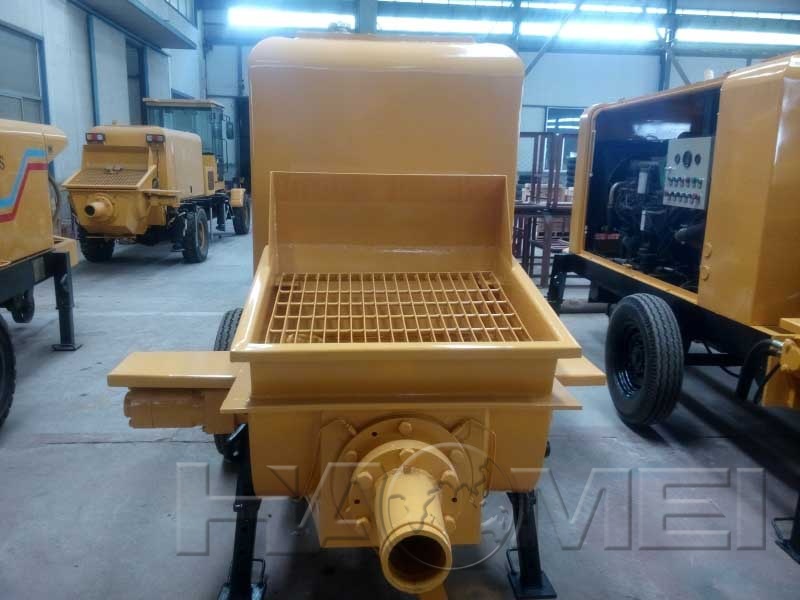
The advantages of using this equipment are clear on projects where access, cost, and placement accuracy are important.
| Advantage | Practical result on site |
|---|---|
| Flexible concrete placement | Hoses can reach indoor areas, backyards, tunnels, and upper floors with proper layout |
| Lower operating cost | No boom structure means simpler transport, lower maintenance, and less fuel use in many cases |
| Stable continuous pumping | Reduces manual wheelbarrow work and helps maintain pour quality |
| Compact footprint | Suitable for urban projects, repair work, and narrow access jobsites |
| Easy relocation | Towed by a suitable vehicle between different work areas |
Power selection also affects performance. Diesel models are useful where grid power is unstable or unavailable. Electric models are quieter, cleaner at the site, and economical where reliable power is available. Some contractors evaluate dual-power or region-specific engine configurations to meet emission and site requirements.
If the project requires a compact towable model, the HBTS40 Towable Concrete Pump can be considered for small building work, floor pours, and general concrete delivery tasks.
Operation, Maintenance, and Troubleshooting
Correct operation has the same importance as machine quality. Before starting, inspect hydraulic oil level, lubrication points, electrical connections, tires, hopper grate, and delivery pipeline. The pipeline should be arranged with smooth bends, secure clamps, and a diameter suitable for the mix. Sharp bends increase resistance and raise the risk of blockage.
Before concrete enters the hopper, the line should be lubricated with cement slurry or a manufacturer-approved priming material. The concrete mix should have suitable slump, aggregate size, and cohesion. Mixes that are too dry, poorly graded, or already setting can cause high pressure and blockage.
During pumping, operators should watch pressure changes, engine or motor sound, hopper material level, and pipe vibration. Never allow the hopper to run empty during continuous pumping, because air intake can cause concrete surging and pipe impact.
| Problem | Possible cause | Practical solution |
|---|---|---|
| Low pumping output | Worn piston, low hydraulic pressure, concrete too stiff | Inspect piston, test pressure, adjust mix within approved design |
| Pipe blockage | Poor priming, sharp pipe bend, oversized aggregate | Reverse pump briefly, locate blockage safely, clean and re-prime |
| Oil temperature too high | Dirty cooler, low oil level, continuous overload | Clean radiator, refill correct oil, reduce pressure demand |
| S-valve leakage | Worn wear plate or cutting ring | Adjust clearance if allowed, replace worn parts |
| Abnormal vibration | Loose clamp, unstable outrigger, pipe not fixed | Stop pumping, secure clamps, level and support the pump |
| Electrical fault alarm | Loose connector, sensor issue, overload protection | Inspect wiring, reset only after cause is removed |
Cleaning is not optional. After each pour, remove remaining concrete from the hopper, cylinders, valve area, and delivery line according to the operation manual. Hardened concrete inside the line can damage pipes and create dangerous pressure during the next startup.
For scheduled maintenance, set intervals based on working hours, concrete volume, and site conditions. Daily tasks usually include lubrication, visual inspection, cleaning, and checking hydraulic oil level. Weekly or periodic work may include tightening bolts, inspecting the wear plate clearance, checking the cooler, replacing filters, and examining pipe wall thickness.
When comparing trailer-mounted concrete pumps, ask for rated output, maximum theoretical pressure, maximum aggregate size, power type, delivery cylinder size, valve type, towing dimensions, spare parts availability, and after-sales service response. A lower purchase price may not save money if wear parts are expensive, hydraulic components are hard to source, or the frame is not strong enough for long-term transport.
The best selection is the machine that matches your concrete mix, pumping distance, site access, power supply, and maintenance capacity. A well-designed trailer pump with durable materials can raise placement efficiency, reduce labor demand, and keep concrete delivery stable across many types of construction work.
Original source: https://www.concrete-pump-cn.com/a/cement-pump-trailer-for-sale.html
Tags: cement pump trailer for sale, trailer concrete pump, concrete line pump,
Previous: Concrete Pump Truck Price New
Next: How Much Does a Concrete Pump Truck Cost?