

 feedom@haomei-machinery.com
Concrete Pump Trailer
Posted On: 28/04/2026 | Posted by: Haomei Concrete Pumps
A concrete pump trailer is built for one main purpose: moving fresh concrete from the mixer to the placing point with stable pressure, low waste, and less manual labor. For construction equipment purchasers, the real value is not only the rated output on a brochure. It is also the frame strength, hydraulic layout, wear parts, cooling system, service access, and the way the machine performs after hundreds of hours on demanding jobsites.
Modern trailer-mounted pumping equipment is widely used for houses, foundations, tunnels, bridges, floor slabs, slope protection, and repair work. Compared with manual carting or crane bucket placing, it can deliver concrete through pipelines with better continuity and less site congestion. When matched with the right mix design and pipe diameter, the unit helps crews place material faster and more accurately.
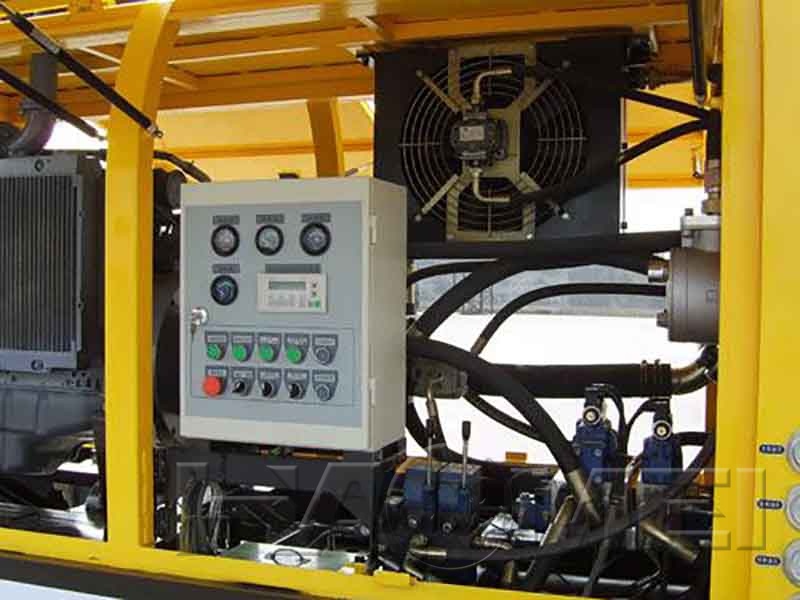
Advanced Design Details That Improve Jobsite Performance
A high-quality towable pump starts with a rigid chassis. The frame must carry vibration from the pumping cylinders, towing stress, and the weight of the hopper, hydraulic oil tank, engine or motor, and delivery system. Many advanced models use a reinforced welded structure with well-positioned support legs, allowing the machine to remain stable during high-pressure operation.
The pumping system is the heart of the equipment. Most trailer pumps use twin concrete cylinders and a hydraulic drive. While one cylinder pushes concrete into the pipeline, the other draws fresh concrete from the hopper. A distribution valve, often an S-valve in many construction pumps, controls the flow direction. This design supports continuous delivery and helps reduce pulsation in the pipeline.
The hydraulic system also deserves careful attention. A well-designed circuit uses quality pumps, valves, seals, and filtration to maintain pressure while reducing heat and contamination. Good filtration is important because dust, cement particles, and moisture can shorten hydraulic component life. On many modern units, pressure gauges and easy-access test points help technicians diagnose problems faster.
Cooling is another design detail that affects uptime. Concrete pumping often happens in hot, dusty environments. A larger hydraulic oil radiator, well-positioned fan, and clear airflow path help maintain safe oil temperature. When oil overheats, the machine may lose pressure, seals may age faster, and system efficiency can drop.
For users comparing compact pumping options, a Line pump is often selected for work where flexible hose placement, moderate output, and easy transport are important. For larger pours, models with higher motor power, larger cylinders, and stronger hydraulic pressure may be preferred.
| Design area | What to check | Practical advantage |
|---|---|---|
| Chassis and outriggers | Reinforced welds, wide support points, towing balance | Better stability and safer operation |
| Pumping cylinders | Chrome plating, smooth bore, replaceable wear parts | Longer service life and steadier output |
| S-valve and wear plate | Hardfaced surfaces, correct sealing pressure | Lower leakage and stronger pumping force |
| Hydraulic system | Branded components, filtration, cooling capacity | Less downtime and easier maintenance |
| Control panel | Clear buttons, emergency stop, pressure display | Easier operation and faster fault checks |
| Hopper | Strong grate, agitator design, safe working height | Better concrete intake and improved safety |
Material Choices and Equipment Advantages
Material selection directly affects reliability. The hopper and concrete-contact components must resist abrasion from sand, aggregate, and cement paste. Wear plates, cutting rings, and S-valve surfaces are commonly made with high-hardness alloy materials or wear-resistant surfacing. These parts are designed to take the heaviest abrasion, so they should also be easy to replace during scheduled maintenance.
Concrete delivery cylinders are often chrome-plated or treated to reduce friction and resist corrosion. Smooth cylinder walls help piston cups seal correctly, which improves pumping efficiency. If the surface becomes scratched or worn, pressure loss and slurry leakage may appear. That is why high-quality cylinder processing is more than a manufacturing detail; it affects daily production.
The main frame normally uses structural steel with proper welding and anti-rust coating. A strong coating system matters because pumps work around water, cement slurry, and outdoor weather. Electrical cabinets should be sealed against dust and splash, with clear wiring labels for maintenance.
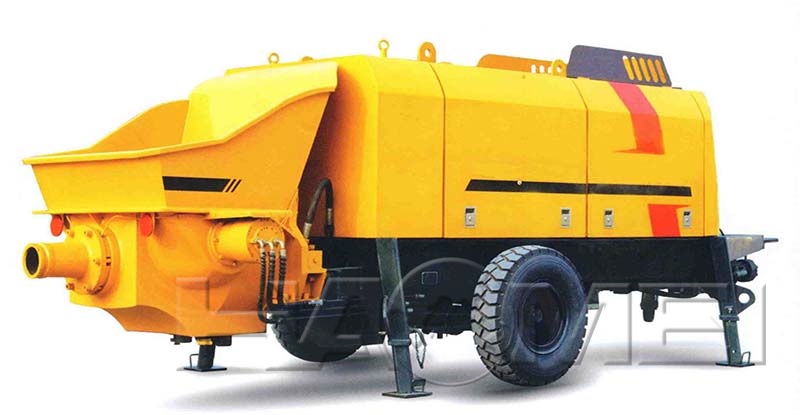
The advantages of using this equipment are clear on many jobsites. First, it reduces manual handling. Crews do not need to move as many wheelbarrows or buckets, so labor can be assigned to placing, leveling, and finishing. Second, it supports continuous pouring, which is useful when cold joints must be avoided. Third, it can work in areas where a boom truck may not have enough access, such as narrow streets, indoor renovation areas, and small residential foundations.
For contractors needing a compact towable solution, the HBTS40 Towable Concrete Pump is a relevant option when the project requires mobility, practical output, and lower site access requirements than larger equipment.
| Material or component | Preferred feature | Benefit during operation |
|---|---|---|
| Wear plate | High-hardness alloy surface | Resists abrasive concrete flow |
| Cutting ring | Strong sealing surface | Helps maintain pumping pressure |
| Delivery cylinder | Smooth chrome-plated surface | Reduces piston wear and leakage |
| Hydraulic hose | Pressure-rated, oil-resistant rubber | Improves safety and reliability |
| Electrical cabinet | Dust-resistant layout, labeled wiring | Faster inspection and repair |
| Frame coating | Anti-corrosion paint system | Longer service life outdoors |
Good performance also depends on the concrete itself. Pumpability is affected by aggregate size, grading, cementitious content, water-cement ratio, admixtures, and pipeline length. Project teams should follow approved mix designs, site specifications, and recognized concrete practice such as ACI guidance and local standards. A pump cannot correct a badly designed mix, but a well-built machine can move a suitable mix smoothly and efficiently.
Common Problems and Practical Troubleshooting
Even a strong trailer-mounted pump needs correct operation and maintenance. Many faults begin with small signs: rising pressure, slow cylinder movement, unusual noise, hot hydraulic oil, or concrete leakage near the valve area. Operators should stop and inspect early rather than forcing the machine to continue under abnormal load.
Pipeline blockage is one of the most common problems. It can be caused by poor lubrication before pumping, a harsh mix, oversized aggregate, sharp pipe bends, leaking pipe joints, or long pauses with concrete sitting in the line. Before starting, the crew should lubricate the line with mortar or an approved priming material. During operation, avoid sudden long interruptions. If a blockage is suspected, release pressure safely before opening any pipe clamp.
Low pumping pressure may come from worn piston cups, a worn wear plate, a loose cutting ring, hydraulic leakage, or incorrect pressure adjustment. Technicians should inspect the concrete-side wear parts first, then check hydraulic oil level, filters, hoses, and pressure settings according to the manufacturer manual.
Overheating hydraulic oil is usually related to dirty radiators, low oil level, blocked filters, continuous overload, or a failing cooling fan. Clean the radiator fins with care, confirm the fan runs correctly, and replace filters at the recommended interval. Using the specified hydraulic oil grade is important because the wrong viscosity can cause poor lubrication or high temperature.
| Symptom | Likely cause | Practical action |
|---|---|---|
| Pipeline blockage | Poor priming, harsh mix, long pause, sharp bends | Release pressure safely, locate blockage, clean line, adjust site practice |
| Weak output | Worn piston cups, valve leakage, low hydraulic pressure | Inspect wear parts, check gauges, test hydraulic circuit |
| Oil temperature too high | Dirty cooler, low oil, blocked filter, overload | Clean cooler, refill oil, replace filter, reduce load |
| Concrete leaks near hopper | Worn wear plate or cutting ring | Adjust sealing pressure or replace worn parts |
| Abnormal vibration | Loose pipe clamps, unstable support legs, uneven ground | Tighten clamps, reset outriggers, level the machine |
| Electric fault | Loose wiring, moisture, damaged sensor | Isolate power, inspect cabinet, replace faulty parts |
Routine service is simple but important. Clean the hopper, S-valve, delivery cylinders, and pipelines after every pour. Grease lubrication points as specified. Check bolts, pipe clamps, rubber seals, hydraulic hoses, and electrical plugs before each shift. Keep a record of operating hours, filter changes, wear part replacement, and pressure readings. This record helps maintenance teams notice trends before a small issue becomes a costly stoppage.
Safe operation should always come first. The machine must stand on firm ground, the delivery pipe must be secured, and no one should stand in front of an open pipe outlet during pressure testing or blockage handling. Operators should wear proper personal protective equipment and follow the manufacturer manual, jobsite safety rules, and local regulations.
Original source: https://www.concrete-pump-cn.com/a/concrete-pump-trailer.html
Tags: Concrete Pump Trailer, Concrete Line Pump,
Previous: Cement Boom Truck
Next: Boom Pressure Concrete Pump